
Edge applications and AI integration
Connect application software and on-device intelligence with the embedded platform.
Services
Software that connects perception, decision-making, devices and operations.
Bryantech approach
We bring the relevant engineering disciplines together around the application, measurable requirements and a realistic path to production.
Connect application software and on-device intelligence with the embedded platform.
Integrate decision-making and application behaviour with sensing and control.
Link connected devices, gateways and cloud applications around the data flow.

Engineering in practice
An IoT system includes more than wireless connectivity. Device identity, data handling, user interfaces and ongoing operation must be designed together so the platform fits its application and support model.
Applications
Smart buildings, energy monitoring, parking, industrial equipment and connected devices.
Technical scope tailored to your system and development stage.
Integrate sensors, processing, local interfaces and gateways. Select BLE, Wi-Fi, cellular, NB-IoT or UWB according to the deployment requirements.
Define device messages, APIs, storage and telemetry processing. Organize data for monitoring, analysis and application workflows.
Develop web, iOS and Android interfaces for device visibility, configuration, control and alerts.
Plan device management, access control, remote support and deployment on the agreed cloud environment, including AWS or Microsoft Azure.
A structured sequence with review points and recorded decisions.
Identify users, devices and data flows.
Develop device, gateway and API integration.
Implement applications and monitoring.
Verify connectivity, access and operations.
The agreed package supports design review, integration and the next project stage.
Device integration, application code and API documentation.
Environment configuration, operating guidance and integration results.
Engineering in practice
An IoT system includes more than wireless connectivity. Device identity, data handling, user interfaces and ongoing operation must be designed together so the platform fits its application and support model.
Applications
Smart buildings, energy monitoring, parking, industrial equipment and connected devices.
Technical scope tailored to your system and development stage.
Integrate sensors, processing, local interfaces and gateways. Select BLE, Wi-Fi, cellular, NB-IoT or UWB according to the deployment requirements.
Define device messages, APIs, storage and telemetry processing. Organize data for monitoring, analysis and application workflows.
Develop web, iOS and Android interfaces for device visibility, configuration, control and alerts.
Plan device management, access control, remote support and deployment on the agreed cloud environment, including AWS or Microsoft Azure.
A structured sequence with review points and recorded decisions.
Identify users, devices and data flows.
Develop device, gateway and API integration.
Implement applications and monitoring.
Verify connectivity, access and operations.
The agreed package supports design review, integration and the next project stage.
Device integration, application code and API documentation.
Environment configuration, operating guidance and integration results.
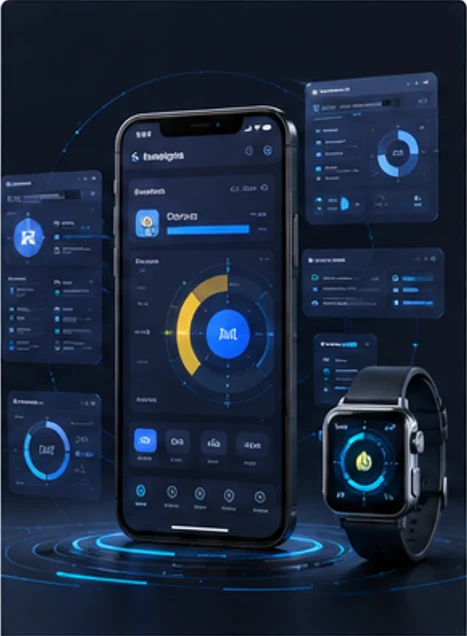
From data to action
Connect device status, alerts, configuration and control in a consistent web or mobile workflow. Define user roles and operating requirements alongside the devices and cloud services.
Engineering in practice
Cybersecurity scope is aligned with the assets, operating constraints and business processes being protected. Work can cover assessment, implementation, operational support or governance for enterprise and industrial environments.
Applications
Enterprise IT, cloud applications, industrial OT and IoT deployments.
Technical scope tailored to your system and development stage.
Review assets, architecture, vulnerabilities and exposure. Organize findings into a risk register and remediation priorities.
Support network and endpoint controls, access management, cloud configuration and application/API protection.
Plan segmentation, boundary controls, protocol monitoring and hardening while considering operational requirements.
Support logging, alert review, incident investigation, recovery procedures, supplier requirements and staff awareness.
A structured sequence with review points and recorded decisions.
Agree assets, responsibilities and assessment boundaries.
Record findings and remediation priorities.
Apply the agreed controls and procedures.
Verify changes and prepare operating guidance.
The agreed package supports design review, integration and the next project stage.
Asset records, risk registers, findings and remediation plans.
Security configurations, monitoring guidance, response procedures and training materials.
Build what comes next